
We Need To Talk About AI, Pinterest, and Your Brand Photo Inspo Boards
→TL;DR: This post is for business owners, founders, and personal brands using Pinterest for shoot inspo who are overwhelmed by AI‑perfect images and want realistic, confidence‑boosting ideas for their next brand photoshoot.
🔥 In this post, you’ll learn how to spot AI images on Pinterest, why they can quietly sabotage your expectations for a brand photoshoot, and what to use instead so your photos feel like you.
During personal branding photo sessions with my creative business clients here in Austin, TX, many share their inspiration, look goals, and ideas from Pinterest boards with us at their shoot.
Nothing about this is unusual, of course_but here more recently, in brand shoot planning or at the start of studio shoots, clients have shared Pinterest boards with me where my gut has recognized something as off. You know the feeling… you can’t put your finger on it just yet but you know somethin’ here ain’t quite right.
To know me is to know that I am hyper-focused on details. And sure enough, this is where I stop a client’s scroll, lean in, and go, “Wait, wait..wait a minute…” using my two fingers to zoom in on the phone’s image. As my gut suggests, I find myself disheartened to see client inspiration boards scattered with pin after pin of AI-generated images.
Recently, I spotted another client’s boards sat ai images buried in the columns of pins around it. I decided to have a conversation about this with my client. I was preparing to share why I didn’t think she should be using AI images as inspiration, particularly for her hair and makeup look samples. But to my shock, she had no idea!
It had not even occured to me that noticing ai wasn’t an easy spot or common knowledge. But — I do stare at people’s faces all day. Shit. My clients don’t know that AI images being flagged as real are this prevalent on Pinterest? Would they even know how to spot them!?
If she hadn’t spotted this, then yes, it was possible. And it was happening.
While being fooled into thinking you can achieve something that exists only in the computer realm is terrible, there’s a bigger problem here, and that is:
My clients are far from alone in this. And I probably only know it myself because I stare at images all day long.
As I strategize with my clients for their brand shoots, I see more and more clients unwittingly using AI-generated images as part of their brand photoshoot look inspiration.
You must first know this: No human actually looks like this. None of it is replicable.
Using AI-generated pins as a guide or expectation to be met by our photographers, makeup artists, and ourselves only sets all of us up for emotional failure. It sets your own view of your investment up for failure too.
My hope is that this article will open your eyes to the growing problem, help you identify AI imagery when you stumble across it in the wild, and equip you with the action steps you need to elevate your brand in an AI world.
*** NOTE: This article contains MANY links to Pinterest pins to instruct you on the tell-tale signs of AI.
Advice: Log out of your Pinterest account before clicking on these links. It's better to view these AI examples as a guest user because I’ve found that clicking on an AI-generated pin leads to more of them showing up in your feed.
To make this problem even more frustrating, you often can’t tell something is AI from the thumbnail. Then, once you’ve opened the larger image, the algorithm assumes you're interested and will show you more of it. And if you go down rabbit holes like me, your eyes will cross and you’ll have some residual icky feelings that linger.
It's frustrating, I know! So log out, and then feel free to click away at these examples.
ANOTHER NOTE & an act of love, if I’m honest — I’ve done all the legwork to fully loop you in on this AI Pinterest spiral. I have curated this for you to see without endless hours (no, days - but I digress) of digging or exposure infiltrating your own beauty perceptions.
This started by accident. I was not. even. searching. Until I was. All I did was click on one sus image. Which then marked a breadcrumb trail that truly never ended and subjected me to weird, unimaginable & eerie places on Pinterest. So please feel encouraged to head to my link when you’re all done here. And, WTF Pinterest!?
Why AI imagery hurts your brand photoshoot
If you’re out of the loop or haven’t been on Pinterest lately, you need to know that it has experienced a GIANT uptick in AI imagery and fake Pinterest pins.
Try browsing it for hair and makeup inspo, and chances are high you’ll have a hard time finding a single real human face. If you’re paying attention, you’ll likely ask yourself, “Why does every woman seem to have the same face?!”
Try looking for home reno inspo, and you’ll uncover an unending feed of unrealistic and a little too “perfect-looking” settings (don’t look too close!) Don’t you find these AI images rather boring?
Heck, try typing in pretty much anything, and you’ll find plenty of AI-generated images, many of them stolen from other artists, human faces, and celebrities all mashed together (because that is how AI functions, after all.)
And the kicker is that you’d think the titles might give you a clue. Ha. Think again. The titles of these pins, should there be one, are also deceptive. So, if you weren’t sure if the pin was fake, the title will hook you in and make you think it's real. Here’s an example of what I mean – and another one.
It's bananas. B-a-n-a-n-a-s. 🎵
Some of us can see the difference right now, but I’m scared of where this is going. Everyone should beware. AI is getting better at mimicking, and soon, fewer and fewer people will be able to tell the difference. Computer-generated images will look like the real thing – while not offering a shred of reality. And it sure seems to me that the images using AI won’t even be disclosed.
I worry that, eventually, every photo we encounter online will appear to be of this same unnaturally beautiful woman, tweaked 100,000 times just a *smidge so that each version looks like a new version of the version before. If you head to my Pinterest board, you’ll see exactly what I mean. Somehow, they all look the same, with perfectly smoothed hair and perfect skin – cast under the perfect lighting, so we can be fooled into thinking that the fake, picture-perfect image is real (or if not, better).
Can you imagine a world where those are the only images we see? I think it could be headed straight for us.
Look, the hard truth is I am expecting a huge influx of body image issues and even more unfair expectations to be put on us because of this. Think of the prevalence of self-image problems that already exist. Body dysmorphia. Feeling like you always need to lose weight. Eating Disorders that follow. Lack of self-confidence and trying to be unseen. Puberty becomes even worse because, where’s my glass skin? Discomfort in your skin. Disconnection and Isolation. Self-shaming. Always feeling less than. And then self-sabotage and paralysis because it’s just all too much. AI imagery will likely exacerbate the problem - and this pisses me the f*ck off.
Learning to recognize it, though, is the first step to getting ahead of it.
How to spot AI brand photos on Pinterest
The first step to being able to identify AI is noticing when something feels slightly off about an image – especially if you can’t put your finger on what that something is.
You just know something is off. Usually, it’s proportions, symmetry, textures, or color enhancement,
but also…no one actually looks like that.
Tell-tale Signs of Ai Imagery
1. LACK OF TEXTURE -Impossibly perfect faces and bodies – ultra‑smooth skin, zero pores, no under‑eye texture, “Barbie” proportions, or gravity‑defying curves that don’t exist on real humans.
These computer-generated “women” all have perfect, flawless, youthful skin with cheek freckles in every shade of person and – most tellingly – no texture at all. Their skin texture is perfection that doesn't exist. It’s glassy-looking. It’s polished quartz.
*Note: I’ve noticed that AI is already trying to correct this problem. Some of them add a bit more "grit," if you want to call it that.
📌 See my example of a “glassy” texture (poreless, smooth, and totally nonexistent) vs an AI image with subtle texture and lines. They are soft and almost unnoticeable.

GLASSY VS “TEXTURED” SKIN IN AI IMAGES.
The glassy image looks flawless, smooth, and shiny. It mimics polished quartz.
The more textured image shows faint smile lines, subtle lines under the eye, and deeper carved lines along the lips.
*All images in this post have been sourced form Pinterest

These were found as the covers of pins, almost all of them hair and beauty related with titles like, “Silver Color Bob for Seniors”. “Woman over 60” . This one reading, “18 Stylish And Cute Glasses For Women Over 60 To Try Now . Notice they seem to have the same sharp chin, same full lips in a similar half smile, and a sharp nose with glassy skin.
*All images in this post have been sourced from Pinterest
2. SAME AGE
Another thing these AI “people” have in common is that they all come across looking the same age in these images. (Youthful - early 20s), gray hair or not.
For instance, is this person supposed to be old!? Oh, look, there she is again. Wait, and again. Notice how she has perfectly silver hair with no damage at all! Perfect hairline, too. (But check out that last image and zoom in on her teeth. Remember what those look like.).
This is for sure an “older woman” over 60 according to AI. I know because the title of the pin says, “ 34 Elegant Short Haircuts for Women Over 60”. I’m not kidding.
This woman is over 40, apparently. Cause that’s what the pin says!
Here’s an attempt at an "older" woman, and here’s another one. One more for good measure. Are you getting the idea?

3. SAME SHAPES/FEATURES
You may have noticed by now that even older women or women of different races all have the same facial shapes and features. When did everyone start looking like that?! I've never seen anyone look like this in the wild, but yet they all seem to have:
Big, voluptuous, perfectly shaped lips (the kind women pay for)
Either thin, sharp-pointed noses or cute button noses
Flawless, glassy, and untextured skin (they sometimes add grain over the image, making it less crisp and harder to identify as AI)
Hair that is perfectly imperfect - the kind you wish your mama gave you. Thick, full-bodied, wavy, and stunningly highlighted, framing the face just-so (zoom in close to see the smeared strands that give ‘em away)
Thick, bushy eyebrows - the kind almost no one naturally has
Voluptuous, and perfectly shaped lips
Crisp, angled chins and sleek jawlines
The cheekbones we all dream of
Thick, perfect eyelashes
Almond or cat-shaped often exaggerated in color and presentation, or dull & lifeless
lifelessIntensity in the eyes and face – often showing a relaxed expression, melancholy, or sultry-like
Highlights in the perfect spots with stunning lighting
Beautiful, white, perfect teeth or oddly large and misshapen, even beaver-looking teeth (IF they're even showing their teeth– most are not smiling! )
Full, slightly parted lips with just a hint of two large front teeth peeking out that feel off. Zoom in on this one and on this other one here to see what I’m talking about.
Perfectly applied makeup – no variation in application or noticeable drop-offs


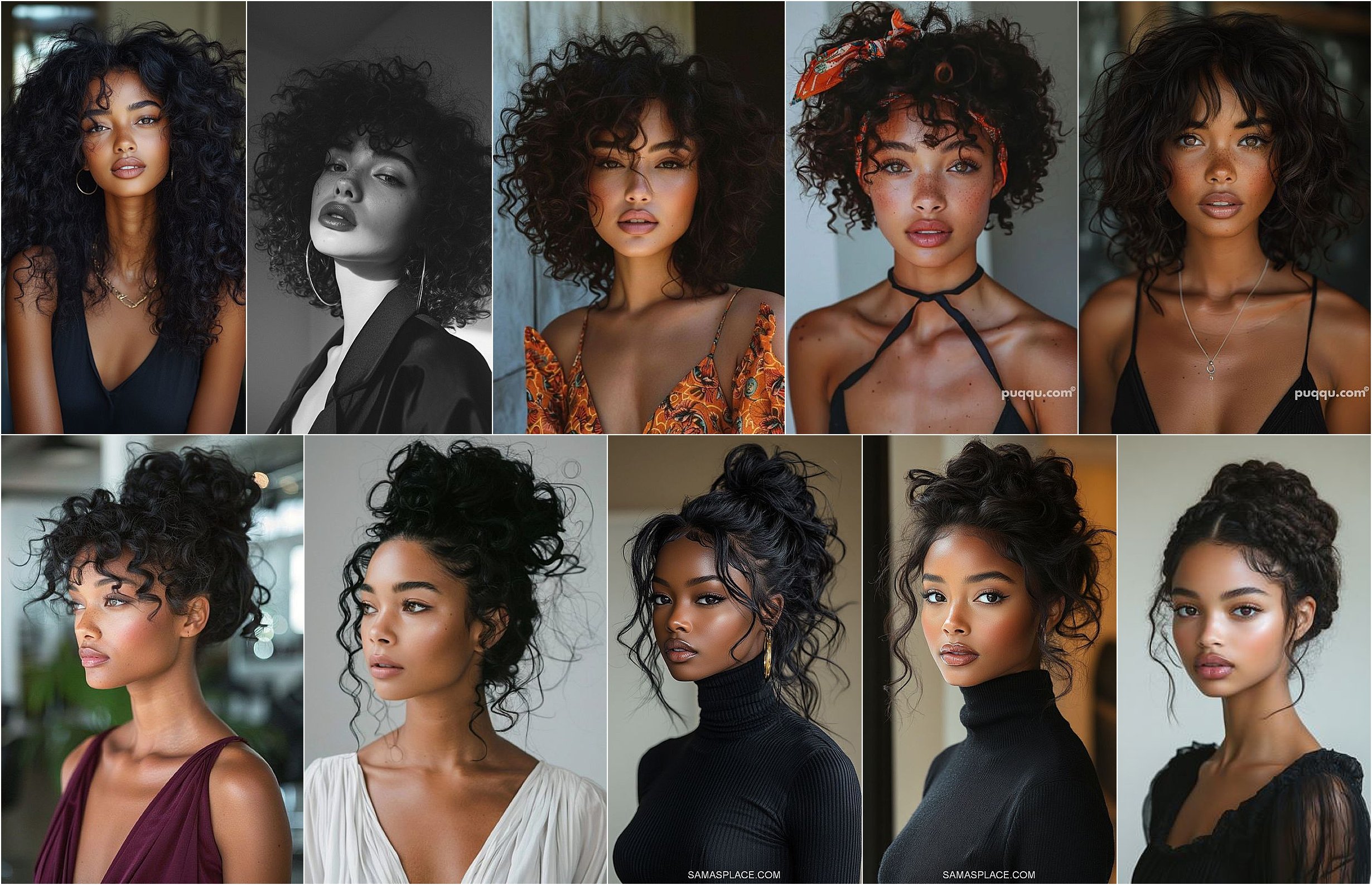
Then at some point down the chain, it takes a turn. This unrealistic “flawless” AI person gets cloned and mashed up so many times that her face begins to go off the rails. This once ‘perfect woman’ is then carelessly sent off into the internet void to become the bizarre, twisted, cartoon version of the ‘fake perfect person’ she was curated to be.
And then it’s STILL posted. No quality control, I tell ya.

I mean, MY GOD. Some of these get really ridiculous. <<<< Like ok, her neck is clearly broken and you’re just going to use her to promote “5 creative date night ideas” anyway? The sheer audacity to use AI to make these atrocious images and then thoughtlessly post them on the internet to get more sales. Consumerism at its finest.
I fell and fell and fell.
I fell so far down the AI rabbit hole,
I’ve yet to meet its end.
As I fell deeper into the rabbit hole, here’s what I heard creep in:
“It’s too bad you don’t look like this. Buy, buy, buy. It’s money you need to spend so you can look like this AI woman and matter in the world.”
Ai created this '“woman” above and this NEVER— And I mean, never, ran out of new phony iterations of itself.
Remember, I spent literal days and countless hours (not my best use of time, honestly) studying these patterns to create a complete picture so I could educate you on them.
NAME BRANDS ARE DOING THIS AI-IMAGE-STUFFING TO YOU, TOO.
Brands are falsifying themselves to trick frequent shoppers, you, into influencing your buying behaviors so that you will continue to buy.They’re sneakily altering the filter through which you see things in the world (and in the mirror), right under your nose and without you even knowing.
Ebay, Etsy, & Amazon sellers, Wal-Mart, jewelry stores, hair care & makeup brands, even well-known stores like Gap, Anthropologie, Reformation, Banana Republic, Nordstrom & Free People.
In fact, this AI image is currently being used to sell makeup on the free-people website. Albeit, it’s a rather sloppy one. Is there life in those eyes? Check the teeth. Would exclusive brands like free people or Anthropologie share images where women have imperfect, crooked teeth? Nah, that could damage the desired aesthetics and drag down their brand’s appeal. Did they feel like this was better?


This is clearly an AI-generated image. It’s currently being used to sell clothing on Banana Republic’s website. The jig is up due to the blemished face, strange, elongated arms and torso, and that one weird hand with the weird hand give it away. Notice these signs. View this contorted image and more, currently linked here.
All these big-name, household brands are manipulating images so that they can manipulate you.
You might not have yet noticed. Depending on where you tend to browse, maybe you haven’t come across these fake images yet.
Remember, these AI images are first generated from our real faces without our consent. Brands are using AI to reuse, reduce, and recycle us. Because it keeps their pockets full.
It’s early on in this world’s AI journey, and AI- manipulated images are looking like a cheap, lazy tactic. Already I think to myself —->How boring.
For the love of God, give me real human women with laugh lines, soft chins, big noses, smile lines that sing a song of joy, and leave her wild, tumbling hair out of place. She warms my soul. She can ease pain just by the glance she flickers discreetly to you through her so-alive eyes. Every crinkle and crease and roll and gray hair that won’t be tamed has been earned. Leave our true, beautiful, and oh-so-perfectly-human version of women alone.
My biggest takeaway from this:
Flawless beauty is very clearly flawed.
The only way to fight against AI contorting our self-perception is by embracing our humanness in life — and in photoshoots.
So, are these unrealistic AI beauty ideals leading us down a path where we will scrutinize our appearances even more harshly? Only time will tell, but I’m sure, like me, you too can see where this is going.
Think about your kids and teenage daughters. Imagine how this is going to make aging women and older clients feel. I mean, I know we shouldn't feel bad about getting older – aging is a natural and beautiful part of life, should we be that fortunate – but I know many of us do anyway. Now, with AI imagery, every “old” person looks like a twentysomething with rad grey hair and porcelain skin. Aging is hard enough. We definitely don’t need this ish.
So what can we do?
The best way to combat AI's unsettling influence on self-perception is to actively embrace our humanness in photoshoots and our everyday lives.
When we learn to embrace our imperfections and the unique stories etched on our faces, we send a powerful message to every other woman who came before us and who will come behind us, that beauty is not confined to youthfulness or flawlessness —and that’s good for all of us.
Actions To Take Right Now
It is incredibly frustrating that we are not getting ahead of this problem before it becomes uncontrollable, that “the powers that be” permit this to happen—without any disclaimers.
So – as usual – it’s up to us.
What to do instead (action steps)
Spot and name AI when you see it
Keep a wary eye out for AI images on Pinterest, try to avoid pinning them, notice when they show up on feeds you follow, and mention that they’re AI images when you see friends using them. Most importantly, practice positive self-talk: “These images are not real, BUT I AM. Hell, yeah. I am!”Ask Pinterest for better tools
Join us in using Pinterest’s “Request A Feature” form as we collectively ask that they add a function for filtering out AI images. At best, it would be nice for them to let us block it, but, at the least, they could tag such pictures as “AI art” to prevent misleading users. Most of us agree that deceptive practices shouldn’t have a place on any platform.Curate human‑made inspo on purpose
Actively seek out inspo from portfolios of humans (such as ours), work of artists, and historic artistic points of view, like fertility figures, portrait art, and these venus sculptures instead of performing general searches that may turn up an influx of AI-generated images.Protect your professional brand photos
Don’t use AI on your professional brand photos to “perfect” them for social media. First of all, this is not allowed by your photographer, but secondly, doing this creates a fake version of you. Inauthenticity is the opposite of good marketing and will do so much more harm to your business than good.Take a page from today’s Pamela Anderson
Embrace your realness. You don’t need to make your skin look perfect or take 15 years off your age. As “perfection” becomes more common, it also becomes more boring. Dare to be less perfect and more real.Vote with your dollars
Choose to spend your money with brands and businesses that invest in real images instead of opting to contort women. Well, if you can find one.Ask Pinterest for better tools
Join us in using Pinterest’s “Request A Feature” form as we collectively ask that they add a function for filtering out AI images. At best, it would be nice for them to let us block it, but, at the least, they could tag such pictures as “AI art” to prevent misleading users. Most of us agree that deceptive practices shouldn’t have a place on any platform.Curate human‑made inspo on purpose
Actively seek out inspo from portfolios of humans (such as ours), work of artists, and historic artistic points of view, like fertility figures, portrait art, and these venus sculptures instead of performing general searches that may turn up an influx of AI-generated images.Protect your professional brand photos
Don’t use AI on your professional brand photos to “perfect” them for social media. First of all, this is not allowed by your photographer, but secondly, doing this creates a fake version of you. Inauthenticity is the opposite of good marketing and will do so much more harm to your business than good.Take a page from today’s Pamela Anderson
Embrace your realness. You don’t need to make your skin look perfect or take 15 years off your age. As “perfection” becomes more common, it also becomes more boring. Dare to be less perfect and more real.Vote with your dollars
Choose to spend your money with brands and businesses that invest in real images instead of opting to contort women. Well, if you can find one.
The Good News: Authentic Brands Have The Homefield Advantage – Now More Than Ever
AI images are fun at first, but people are quickly getting tired of them. AI-generated content lacks the human soul, no matter how good it gets. Dismissing the “human touch advantage” will be a tragic misstep for many brands.This isn’t a takedown of all AI tools; it’s a reality check about using AI faces and bodies as the standard for your real‑life brand photos.
If AI imagery damages big brands' credibility and image, what does it do to your brand when you alter and contort images of yourself? What does it say about a person when they face-tune themselves so their skin is glassy and their brows are full?
Beyond damaging brand credibility and feelings around brand photoshoots, AI only further damages women and their self-esteem.
The line between what's real and what's not may have blurred online, but people are smart. Every day, more and more of us get fed up with the crafted, unattainable perfection that does not reflect the reality we see when we look up from our screens.
So I believe humans will do what they have always done: look for the glimmers of humanity and authenticity. Real connection. And that’s the good news for you and your brand, my friend.
If people can’t trust your photos, they won’t trust your brand, and that mistrust quietly shows up in fewer clicks, fewer inquiries, and weaker ROI from all the marketing you’re doing.
People are tired of perfect. They want real. They want to buy from brands that share their values and uniquely human experiences. Don’t you?
As buyers begin to rebel and seek the real again, in the face of the contrary, the value of brands committed to authenticity will skyrocket.
How We Can Help
At Alicia Leigh Photography, my commitment to truth and diversity in a world of sameness is why I don't use Photoshop.
There are more than enough images out there trying to distort your self-perception. I’m not signing up to go to add to them.
But, let me tell you, I focus on more than just faces. When we work together, I’ll help you prep for a session that will place you and your brand in an authentic light that resonates with and attracts your ideal customers - freedom seekers.
If you are in or can travel to the Austin, Texas, area, check out my raw, story-driven, results-getting experience to learn more and get started.
Want a safe starting point? Here’s a curated Pinterest board of real‑person brand shoot inspo you can use as a baseline for your own session.
Are you wondering if you’ll be able to spot AI in the wild? Browse different samples to familiarize yourself so that you'll be able to spot AI in the wild. If you want to dive deeper into AI education, visit my AI-dedicated Pinterest board. I curated these boards to help you encourage you and give your brand a nudge in the right direction.
And please, keep ‘em off your brand photo inspiration boards.











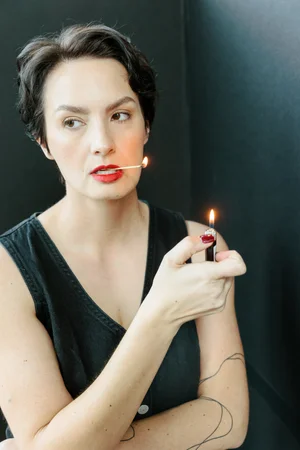
Let’s discuss the flawless beauty pushed on Pinterest. It’s time you knew how to spot AI in the wild—and on PInterest—so you can keep fake images and false narratives off your Austin brand photography inspiration boards for good.
Beyond the damage AI does to brand credibility, it damages your feelings around your own personal brand photoshoot. AI damages women and their feelings about themselves-it’s a self-esteem hazard.